
 0
0
 0
0
A colleague once spent $4,200 on a Celine top handle bag and I privately thought she was out of her mind — until I watched her carry that same bag flawlessly for seven years straight while I cycled through four mid-range replacements totaling $2,800 that all peeled, tarnished, or lost their shape within 18 months. Her single purchase cost less per year than my constant replacements, looked better every season, and still commands $2,800 on the resale market today. Luxury top handle bags justify their price not through branding or exclusivity alone, but through a convergence of material quality, construction precision, design permanence, and economic longevity that cheaper alternatives cannot replicate regardless of how similar they appear in photographs. Aninvestment handbag is not an emotional purchase disguised with financial language — it is a genuinely superior product that delivers measurably more value over its lifetime than the accumulated cost of its replacements. This guide dissects exactly what you pay for at the luxury tier and why those specific qualities produce bags that appreciate in relevance while lesser products depreciate into obsolescence.
What Specific Craftsmanship Justifies Luxury Pricing?
Luxury top handle bags involve 15–40 hours of skilled artisan labor per unit, hand-stitching with waxed linen thread, hand-painted and burnished edges, individually selected leather panels matched for grain consistency, and quality inspection protocols that reject 30–50% of finished products — a labor intensity impossible to replicate at lower price points.
Craftsmanship elements you pay for at the luxury tier:
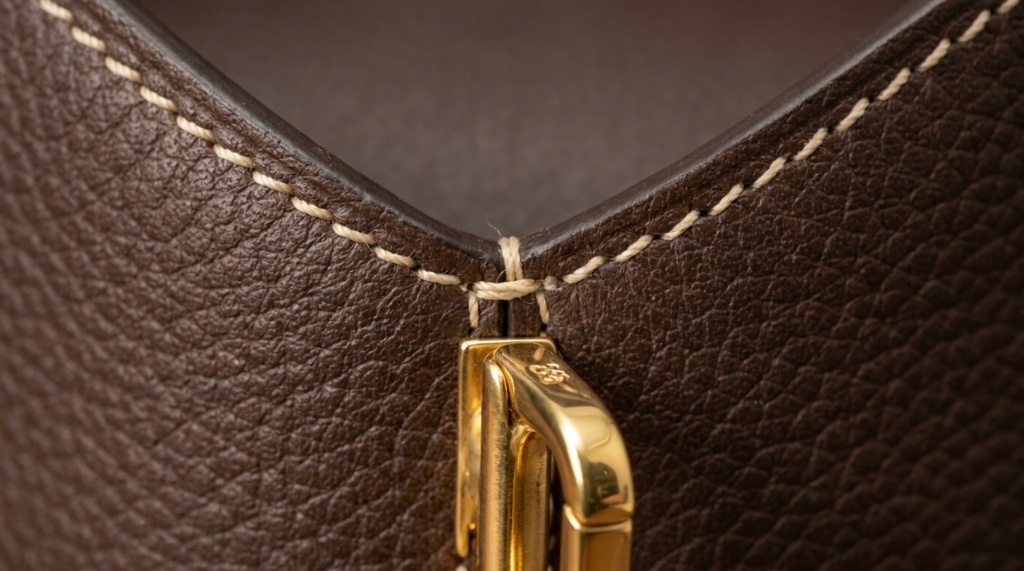
- Hand-stitching (saddle stitch): Two needles, one thread — each stitch individually tensioned by hand. If one stitch breaks, the adjacent stitches hold (unlike machine lock-stitch which unravels). Takes 5–10x longer than machine stitching but lasts decades longer.
- Edge finishing: Raw leather edges are hand-cut, sanded through 4–6 grits, dyed, sealed, and polished individually. Premium houses apply 5–7 coats of edge paint with drying between each. Budget bags use a single coat of paint that chips within weeks.
- Leather selection: A single luxury bag uses leather from one animal hide to ensure consistent color, texture, and grain. Each panel is cut by hand to avoid natural imperfections (scars, stretch marks, insect bites). Rejection rates for hides can exceed 70% at top houses.
- Pattern cutting: Metal dies custom-made for each bag style ensure perfect, consistent dimensions. Panels are cut in specific orientations to the hide’s grain direction, maximizing structural integrity in each position.
- Assembly precision: Components are assembled in specific sequences by specialized artisans — one person handles the body, another the handles, another the hardware installation. Each specialist masters their specific operation over years of training.
The economic reality: a single Hermès Kelly requires approximately 18–25 hours of one artisan’s labor. At luxury artisan wages ($40–$80/hour in France), labor alone accounts for $720–$2,000 before materials, overhead, or margin. This math makes luxury pricing less outrageous and budget pricing more suspect.
Investing in a high-end wardrobe piece requires assessing how a specific item fits into your daily routine and personal aesthetic. Just as choosing the Right Golf Carry Bag for Your Playing Style ensures comfort and peak performance on the course, selecting the perfect luxury purse depends entirely on your daily functional needs. Balancing structure, capacity, and ease of transport is essential whether you are heading to an executive boardroom or stepping onto the green.
How Does Material Quality Differ Between Luxury and Mid-Range Bags?
Luxury bags use the top 5–10% of available leather hides (full-grain, vegetable-tanned, from controlled-origin tanneries), solid brass hardware with PVD plating rated for 10+ years, and waxed linen or polyester-core thread that strengthens with age — while mid-range bags use the remaining 90% of hide supply with chrome-tanning, plated zinc hardware, and standard thread that weakens over time.
Material comparison:
| Component | Luxury Tier ($3,000+) | Mid-Range ($500–$1,500) | Budget (Under $300) |
|---|---|---|---|
| Leather | Full-grain, vegetable-tanned, single-origin hide | Top-grain, chrome-tanned, mixed-origin | Corrected-grain, bonded, or synthetic |
| Hardware | Solid brass, PVD plated (10+ year finish) | Zamac alloy, electroplated (2–5 year finish) | Zinc/pot metal, thin plating (6–12 month finish) |
| Thread | Waxed linen or bonded polyester core | Standard polyester | Basic nylon or cotton |
| Lining | Leather, suede, or premium textile | Cotton twill or polyester | Thin synthetic fabric |
| Adhesives | Minimal — construction relies on stitching | Moderate — assists structural integrity | Heavy — primary structural method |
| Edge treatment | 5–7 hand-applied coats, hand-burnished | 2–3 machine-applied coats | Single paint coat or raw/folded |
The visible difference compounds over time. Luxury materials develop beautiful patina (darkening, softening, developing character). Mid-range materials maintain their appearance briefly then degrade (peeling, cracking, tarnishing). Budget materials begin degrading immediately and look worn within months.
How Do You Calculate the True Cost-Per-Wear of a Luxury Bag?
A $4,000 luxury top handle bag used daily for 10 years costs $1.10 per use — while a $400 mid-range bag replaced every 2 years costs $0.55 per use but totals $2,000 over the same decade with declining aesthetics, meaning the luxury option costs only $2,000 more for dramatically superior daily experience and retained asset value.
Cost-per-wear calculation:
- Luxury bag: $4,000 ÷ 3,650 uses (10 years daily) = $1.10/use. Resale at year 10: ~$2,000. Net cost: $2,000 over 10 years = $0.55/use actual cost.
- Mid-range bag: $400 × 5 replacements (every 2 years) = $2,000 total. No meaningful resale. Net cost: $2,000 over 10 years = $0.55/use — but with 5 periods of declining appearance before replacement.
- Budget bag: $150 × 10 replacements (yearly) = $1,500 total. Zero resale. Net cost: $1,500 — cheapest total spend but worst daily experience and constant “new bag” adjustment periods.
The calculation reveals: luxury bags cost approximately the same as mid-range rotation when resale is factored — but deliver a consistently superior daily experience rather than a repeating cycle of new→decline→replace. You pay similar money for dramatically different quality of daily life.
Which Luxury Top Handle Bags Hold or Increase Their Value?
Hermès Kelly and Birkin bags consistently appreciate 10–15% annually. Chanel Classic Flap and Coco Handle maintain or appreciate. Lady Dior holds 70–100% of retail. Most other luxury bags retain 40–70% of retail value in excellent condition — still far superior to mid-range bags that retain 10–20%.
Value retention hierarchy:
- Appreciating (110–400% of retail): Hermès Kelly, Hermès Birkin, select rare Chanel. These function as genuine alternative assets with returns exceeding inflation and many traditional investments.
- Value-holding (80–110% of retail): Chanel Classic Flap, Chanel Coco Handle, Lady Dior (medium/standard colors), Louis Vuitton Capucines. Retain most purchase value with potential appreciation in classic configurations.
- Strong retention (50–80% of retail): Celine 16, Fendi Peekaboo, Gucci Bamboo, Loewe Puzzle, Dior Book Tote. Lose some value but retain majority — especially in black/neutral colors with minimal wear.
- Standard luxury retention (30–50% of retail): Most other luxury brands in good condition. Still represents meaningful asset recovery versus mid-range bags that retain 10–20%.
The resale factor transforms luxury bag purchases from pure expenses into partial asset preservation. A $5,000 bag that resells for $3,500 after 5 years of daily use cost you $1,500 in actual depreciation — or $0.82/day for five years of carrying one of the finest bags ever made.
What Intangible Value Does a Luxury Top Handle Bag Provide?
Beyond materials and resale, luxury bags provide daily psychological confidence, professional credibility in appearance-conscious industries, reduced decision fatigue (one excellent bag eliminates constant shopping), and the genuine pleasure of interacting with exceptional craftsmanship — intangible benefits that compound over years of daily use.
Intangible value categories:
- Confidence signal: Carrying a well-chosen luxury bag communicates self-investment and attention to quality. This is not about impressing others — it is about the internal confidence that comes from knowing you are carrying something genuinely excellent.
- Professional credibility: In industries where appearance signals competence (law, finance, consulting, real estate, fashion), a quality bag communicates the same attention to detail you bring to your work. Subtle but measurable in client-facing roles.
- Decision elimination: Owning one perfect bag eliminates the mental energy of shopping, comparing, deciding, and replacing. That cognitive bandwidth redirects toward more meaningful decisions. Simplicity has genuine productivity value.
- Craft appreciation: Daily interaction with exceptional craftsmanship — feeling the leather soften, watching patina develop, appreciating precise stitching — provides subtle aesthetic pleasure that mass-produced products cannot deliver.
- Emotional durability: You do not fall out of love with a genuinely timeless luxury bag. The satisfaction persists and deepens rather than fading into boredom as it does with trend-driven purchases. This emotional longevity prevents the wasteful cycle of buy-bore-replace.
When Is a Luxury Top Handle Bag NOT Worth the Investment?
A luxury bag is not worth the investment when it requires debt or financial stress to acquire, when it is purchased for social validation rather than personal satisfaction, when your lifestyle involves conditions that damage luxury materials (rough daily environments), or when the purchase sacrifices other financial priorities that provide more life value.
Do NOT invest if:
- It requires credit card debt: No bag — regardless of resale potential — justifies interest payments. The “investment” argument collapses when you add 18–24% annual interest to the purchase price.
- It is for others’ perception: Buying to impress people who do not notice, do not care, or whose opinion does not improve your life produces buyer’s remorse rather than lasting satisfaction.
- Your lifestyle damages bags: If your daily environment involves moisture, chemicals, rough surfaces, or conditions incompatible with full-grain leather maintenance, a luxury bag suffers rather than ages gracefully.
- You prefer variety over permanence: If you genuinely enjoy rotating bags frequently, luxury pricing works against you. Spending $1,000/year on varied mid-range options may bring more joy than one permanent luxury choice.
- Other priorities exist: Emergency funds, retirement savings, debt elimination, and experiences (travel, education) provide more life value than any object. Luxury bags belong in discretionary budgets after essentials are secure.
For honest evaluations of which luxury top handle bags deliver genuine investment value versus those that merely carry luxury pricing, luxury top handle bags reviewed for investment quality provides detailed analysis of construction, resale data, and real-world longevity — helping you distinguish true value from expensive mediocrity.
Conclusion
A luxury top handle bag earns its investment status through a convergence of superior materials (top 5–10% of available leather), intensive craftsmanship (15–40 hours of artisan labor), proven design permanence (decades of continuous relevance), economic rationality (cost-per-wear comparable to mid-range rotation with far superior daily experience), and meaningful resale retention (40–100%+ of purchase price in well-maintained condition). These factors combine into a product that delivers more value over its lifetime than cheaper alternatives that require repeated replacement.
The investment framing is not marketing language — it is measurable economics. When you factor resale value, elimination of replacement costs, superior daily experience, and the intangible benefits of carrying genuine excellence, luxury top handle bags from heritage houses represent rational purchases for those whose financial foundations are secure. Buy once, carry for decades, and let the quality speak through years of effortless daily service.
Has a luxury bag purchase proven its investment value in your experience — or do you find better value at a different price tier? Share your honest assessment below.
Frequently Asked Questions
How much should I save before buying a luxury bag?
Only buy with cash from discretionary savings — never credit. Financial advisors generally recommend luxury purchases represent no more than 5–10% of annual take-home income. If a $4,000 bag requires more than 2–3 months of dedicated saving from disposable income (after all bills, savings, and obligations), it may be beyond your current financial comfort zone.
Is a pre-owned luxury bag still a good investment?
Pre-owned bags offer the best investment entry point — you buy at already-depreciated prices (20–40% below retail) while receiving the same construction quality and resale trajectory. A well-maintained pre-owned Kelly purchased at $8,000 today may be worth $10,000+ in five years. Authenticate through reputable services before purchasing.
Do all luxury bags appreciate in value?
No — only a select few (primarily Hermès and select Chanel models) consistently appreciate. Most luxury bags depreciate 20–50% from retail but retain value far better than non-luxury alternatives. Buy for enjoyment and cost-per-wear efficiency rather than speculative appreciation. Treating any bag as a guaranteed financial investment is risky.
How long should a luxury top handle bag last?
With proper care, a quality luxury bag lasts 20–50+ years. Heritage brand bags from the 1960s remain fully functional today. The leather, hardware, and construction are designed for multi-generational longevity. Linings may need professional replacement after 15–20 years of daily use, but the exterior structure remains sound indefinitely with basic maintenance.
Can I justify a luxury bag if I work from home?
Yes — if carrying it brings you genuine daily pleasure regardless of audience. A luxury bag serves the person carrying it, not observers. If the craftsmanship, leather quality, and design beauty improve your daily experience (even running errands), the investment serves its purpose. Social visibility is not a prerequisite for personal enjoyment.
What is the minimum quality tier worth calling an “investment”?
True investment pieces start at brands with proven 10+ year resale markets and documented value retention: Hermès, Chanel, Dior, Louis Vuitton (select styles), Celine, Fendi. Below this tier, bags may deliver excellent cost-per-wear value but should not be framed as financial investments because their resale markets are less established and predictable.
Should I insure my luxury handbag?
Yes — bags valued over $2,000 warrant either a specific valuable items rider on your homeowner’s/renter’s insurance or dedicated luxury item insurance. Standard policies often cap jewelry and accessories at $1,000–$2,500 total. Document your bag with photos, receipts, and authenticity certificates. Insurance costs typically run 1–2% of item value annually.


