 0
0
 0
0
You finally land that lunker. The fight was epic, the story is building, and you are holding the fish of the day. But when you reach into your tackle box, your scale is bulky, tangled in line, or just plain broken. We have all been there. You need a reliable way to weigh your catch without sacrificing precious tackle box real estate. The solution is a compact fish scale portable fishing equipment designed for travel. These tools deliver precision without the bulk, ensuring you never have to guess the weight of your trophy again. This guide will walk you through exactly what to look for, helping you avoid common buying mistakes and find a scale that seamlessly fits into your existing gear.
What Exactly is a Compact Fish Scale and Why Do You Need One?
A compact fish scale is a small, lightweight weighing device designed specifically for anglers. Unlike bulky spring scales or digital platforms, these are built to be stowed in a tackle box, vest pocket, or backpack without adding significant weight. They are the ultimate tool for catch-and-release anglers who need quick, accurate data.
Defining the Core Features of a Pocket-Sized Scale
A true compact scale typically measures under six inches in length and weighs less than a pound. It usually features a digital LCD screen, a hook or clamp for attaching the fish, and a simple taring function. Many run on standard coin-cell batteries, which keeps the profile thin and the weight low. The housing is typically rubberized or made of high-impact plastic to survive drops in the boat or on the shore.
Why Size Matters for Travel and Storage
If you are kayak fishing, bank fishing, or hiking to your spot, every cubic inch counts. A full-sized scale takes up space that could be used for lures, pliers, or extra line. A compact version slides into a side pocket or attaches to your belt loop. This portability means you are more likely to have the tool with you when you actually need it, preventing the frustration of having to estimate the weight of a personal best.
The Role of Portability in Catch-and-Record Fishing
For tournament anglers or serious hobbyists, keeping a log is essential. A portable scale ensures you can document every catch quickly, minimizing the time the fish is out of the water. This supports ethical fishing practices. By having a scale at the ready, you reduce stress on the fish and get accurate data for your records or social media bragging rights.
Digital vs. Mechanical: Which Compact Scale Performs Better?
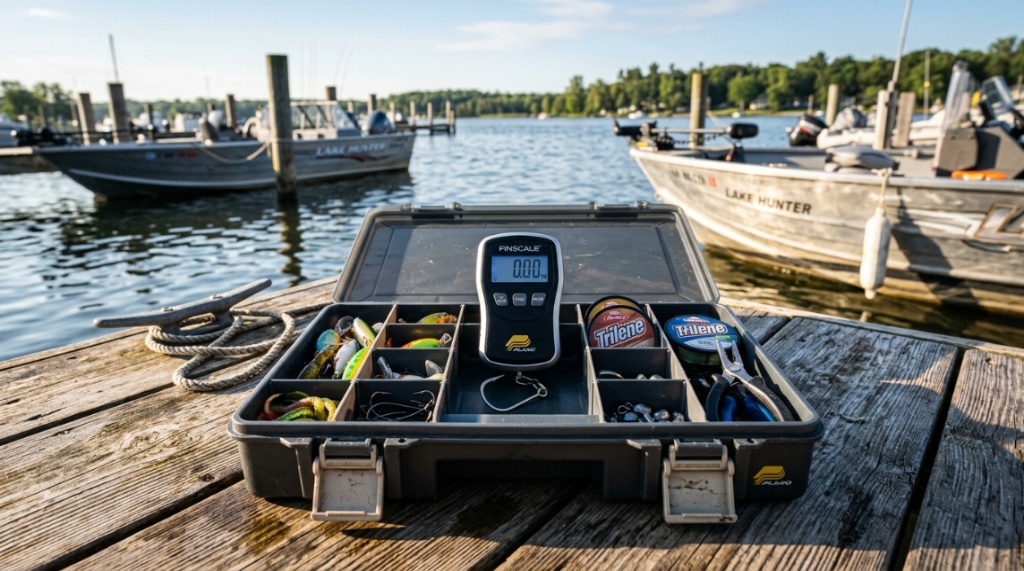
Anglers often get stuck between the reliability of mechanical scales and the precision of digital units. For marine environments, digital scales have become the gold standard due to their accuracy and readability, but mechanical scales still hold a unique advantage in durability.
The Accuracy Advantage of Digital Models
Digital scales use load cell technology to provide readings down to the tenth of a pound or ounce. They are not affected by spring fatigue, which can cause analog scales to lose accuracy over time. If you need to know whether your catch weighs 4.2 lbs or 4.6 lbs for a tournament or a personal record, a digital unit is the only reliable option. They also offer features like backlit screens for low-light conditions at dawn or dusk.
Why Some Anglers Still Prefer Mechanical Scales
Mechanical scales, or spring scales, have a cult following for one primary reason: they never run out of batteries. If you are going on a week-long backcountry trip or fishing in freezing temperatures that drain lithium cells, a mechanical scale is a failsafe tool. They are often cheaper, simpler to repair, and can withstand a saltwater splash better than an unprotected digital circuit board. However, you sacrifice precision for that peace of mind.
Battery Life and Reliability in Saltwater Environments
For saltwater anglers, the environment is the enemy. Digital scales with poor sealing will fail quickly. When buying digital, look for an IPX rating (Ingress Protection). An IPX5 rating means the scale can handle water jets, while IPX7 means it can be submerged briefly. Mechanical scales are simpler to rinse off, but they can rust if the spring or hook is not made of stainless steel. Choose based on your primary fishing environment.
| Feature | Digital Scale | Mechanical Scale |
|---|---|---|
| Accuracy | High (0.1 lbs / 1 oz) | Moderate (0.5 lbs) |
| Battery/Life | Requires Batteries | No Battery Needed |
| Best For | Precise records & tournaments | Backup & remote trips |
| Durability | Varies by IP rating | High if rust-proof materials |
Which Weight Capacity and Accuracy Rating Should You Look For?
Most compact fish scales weigh up to 50 pounds, but the best choice depends entirely on what you are chasing. Buying a scale with too high a capacity for panfish will yield poor accuracy, while a scale with too low a capacity will break when you hook into a large redfish.
Matching Scale Capacity to Your Target Species
For bluegill, crappie, or trout, a scale rated for 20 lbs is perfect. It offers high resolution at lower weights. For bass, pike, or walleye, look for a 30 to 50 lb capacity. If you are saltwater fishing for snook, redfish, or tarpon, you need a scale rated for at least 50 lbs, preferably one with a 100 lb capacity. Remember that a scale is most accurate in the middle of its weight range, not at the very top or bottom.
Understanding Graduations: Ounces, Tenths, and Kilograms
High-end compact scales measure in both pounds/ounces and pounds/tenths. For catch-and-release records, the “tenths” system (e.g., 5.4 lbs) is preferred. If you fish in Canada or Europe, ensure the scale offers a kilogram mode. Avoid scales that only measure in 1 lb or 0.5 lb increments, as these are too vague for meaningful record keeping. A good scale should lock the reading on the screen so you can see the weight clearly after the fish stops moving.
How to Test Scale Accuracy Before You Buy
Before you buy or after you receive a scale, test it with a known weight. Use a dumbbell, a bag of sugar, or a water bottle. A one-liter bottle of water weighs exactly 2.2 lbs (1 kg). Hang it on the hook. The scale should read 2.2 lbs or close to it. If it is off by more than 0.1 lbs, the scale is not well calibrated. Many digital scales allow for manual recalibration, which is a valuable feature.
How to Choose a Scale That Fits Your Specific Tackle Box Layout
Not all tackle boxes are created equal. A scale that fits a soft-sided bag might be too long for a hard plastic utility box. You need to measure your storage space and understand the ergonomics of the device while you are on the water.
Measuring the Scale Against Common Tackle Storage Options
Standard tackle box drawers are about 2 inches deep and 12 inches wide. A compact scale should be less than 1.5 inches thick. Look for scales that are shaped like a pager or a small remote control. Avoid “hook-style” scales that have a rigid arm, as these are often longer and harder to store. Flexible, rounded designs slide into compartments more easily without snagging on soft plastics or hooks.
The Importance of a Retractable or Fold-Away Hook
One of the biggest storage hassles is the hook. A fixed hook sticks out and catches on everything. The best compact scales feature a retractable hook or a clip that folds flush into the body. This turns a potentially dangerous snagging tool into a smooth, pocket-friendly device. Some high-end models use a removable carabiner-style clip that doubles as a belt attachment.
Ergonomics: Grip Size and One-Handed Operation
When you are holding a slippery fish, you need to operate the scale with one hand. Look for a scale with an ergonomic rubberized grip. The buttons should be large enough to press with a thumb while wearing wet gloves. A scale that requires you to set the fish down to press the “tare” or “power” button is a hassle. Test the button layout. The best designs have a single “on/tare” button on the top or thumb-rest area.
What Are the Must-Have Features for Durability and Longevity?
Fishing gear dies from abuse. Water, sand, and impact are the three killers of electronics. Your compact scale needs to be built for torture, not just for a calm day on a pond. Investing in a few key protective features will save you from buying a new scale every season.
IPX Water Resistance Ratings Explained for Anglers
IPX4 is the minimum for a fishing scale—it protects against splashes. But you should aim for IPX5 or IPX7. IPX5 handles water jets (like a washdown hose or a wave crashing over the bow), while IPX7 allows for submersion up to 1 meter for 30 minutes. A scale with IPX7 can be rinsed directly under a tap or survive an accidental drop in the lake. Rubber gaskets around the battery compartment are a sign of good waterproofing.
Material Selection: ABS Plastic vs. Aluminum Housing
ABS plastic is the standard. It is lightweight, impact-resistant, and does not corrode. Aluminum looks great and feels premium, but it can dent and is more susceptible to corrosion if the coating is scratched. For a truly rugged scale, look for a “rubber armor” coating over the plastic. This absorbs shocks and provides a non-slip surface. Avoid bare metal housings unless they are anodized marine-grade aluminum.
Why a Built-in Tape Measure is a Game Changer
Many compact scales now integrate a flexible tape measure, usually a fabric “dressmaker” style tape that retracts. This is a brilliant space-saver. Instead of carrying a separate bump board or ruler, you can measure the length and weight with one device. For catch-and-release fishermen, this minimizes handling time significantly. It is a feature that adds very little weight or bulk but provides double the utility.
If you are looking for dependable options that won’t break the bank, check out this curated list of compact fish scale portable fishing equipment that has been tested specifically for tough coastal conditions. This resource reviews models that balance cost, durability, and precision, helping you skip the trial and error.
How to Properly Clean and Store Your Compact Scale
Even the most waterproof scale will fail if you do not maintain it. Salt crystals and sand are abrasive. A quick rinse and proper storage routine will extend the life of your scale by years. Treat your scale like a high-end reel, not a disposable toy.
The Freshwater Rinse Protocol After Every Saltwater Trip
As soon as you get off the water, rinse the scale with fresh water. Do not press the buttons while rinsing. Focus on the hook, the battery compartment door, and the crevices around the LCD screen. Let the scale air dry in a shaded, well-ventilated area. Never store a wet scale in a closed tackle box. The stagnant moisture inside the box will cause corrosion on the contacts.
Battery Removal and Contact Maintenance
If you are not going to fish for a month or more, remove the batteries. Even when the scale is off, batteries can leak slowly and destroy the internal contacts. If you notice any white or green corrosion on the battery terminals, clean them with a cotton swab dipped in white vinegar, followed by a dry swab. Apply a tiny dab of dielectric grease to the contacts to prevent future corrosion.
Lubricating Moving Parts Without Damaging Electronics
The hook swivel and the internal spring mechanism (if digital) can become stiff. Use a dry lubricant like PTFE spray or a silicone-based lubricant. Do not use WD-40 or oil-based lubricants, as they attract dirt and sand. Apply the lubricant to the hook pivot point, work it in, and wipe off the excess. This keeps the scale responsive and prevents the hook from sticking when you attach a fish.
Just like outdoor gear needs to withstand unpredictable elements on the water, wedding attire handles rugged environments similarly. If you are planning an outdoor alpine ceremony, check out these durable Windproof Styles for Mountain Brides to stay protected against high-altitude gusts.
Can You Use a Standard Luggage Scale for Fishing?
It is a common question among budget-conscious anglers. The simple answer is yes, you can, but you should not. While the technology is similar, the form factor and materials are completely wrong for the fishing environment.
Comparing Hooks: Luggage Hooks vs. Fish Hooks
Luggage scales have a sharp, narrow hook designed to fit through the handle of a suitcase. A fish’s mouth is soft, and that sharp hook can cause severe injury, especially if you are practicing catch and release. Fish scales have wider, blunter hooks or cradles that distribute pressure and prevent tearing the jaw. Using a luggage hook on a fish can lead to an ethical problem and a lost trophy.
Software Features: The Tare and Hold Function
Most luggage scales have a “hold” feature, which is good. However, they rarely have a “tare” function that allows you to zero out the weight of a net or a lip grip. Fishing scales are built to be used with wet, slimy hands and have larger buttons. Luggage scales often have tiny, flush buttons that are impossible to press with fishing gloves. The operating temperature range is also different; fishing scales are tested for extreme heat and cold.
What is the Best Way to Weigh a Fish with a Compact Scale?
Getting an accurate weight is not just about having a good scale; it is about technique. A struggling fish can throw off the reading. If you do not support the fish properly, you risk injuring it or breaking your scale. Here is the professional method.
The “Cradle and Clip” Technique for Large Fish
For fish over 5 lbs, never weigh them by the jaw alone. This can dislocate the jaw. Use a fish-friendly lip grip or a custom weighing cradle. Attach the scale’s hook to the cradle, place the fish in the cradle, and gently lift. For smaller fish, you can use the clamp-style scales that pinch the bottom lip. Always support the body of larger fish with your other hand even while the scale is bearing the weight.
Taring the Scale with Your Gear
If you are using a net or a cradle, turn the scale on, hang the empty net on the hook, press “tare” or “zero,” and the scale will ignore the weight of the net. This gives you the net weight of just the fish. Remember to do this before you catch the fish, or you will have to estimate. Pre-taring is a pro move that ensures perfect accuracy.
Minimizing Air Exposure During the Weighing Process
Speed is critical for fish health. Have your scale ready and the “tare” already set. Lift the fish, wait for the reading to stabilize (usually 3-5 seconds), take a picture if needed, and immediately release the fish back into the water. A quick weigh-in with a compact scale that you have ready to go helps ensure the fish swims away healthy. Do not keep the fish out of water longer than 10 seconds for the weigh-in.
Frequently Asked Questions
Are compact fish scales accurate enough for tournament fishing?
Yes, many digital compact scales are accurate to within 0.1 pounds (1.6 ounces). However, most official tournaments require a certified “boga grip” style scale. For club tournaments or personal records, a high-quality compact digital scale is perfectly adequate and often more convenient than a full-sized platform scale.
How do I stop my scale from giving a different weight every time I test it?
This is often caused by a low battery or a calibration issue. Replace the battery first. If the problem persists, use a known weight (like a dumbbell) and check the manual for the recalibration procedure. Many scales can be recalibrated by holding down a specific button when turning the scale on.
Can I leave my fish scale in the car in the summer heat?
It is not recommended. Extreme heat (over 120°F) can damage the LCD screen, cause the battery to leak, and warp plastic components. Store your scale in a cool, dry place inside your house when not in use. If you must leave it in the car, place it in an insulated cooler bag away from direct sunlight.
What is the difference between a 50 lb scale and a 100 lb scale for bass fishing?
For standard bass fishing (maximum weight around 12 lbs), a 50 lb scale is ideal. A 100 lb scale is designed for very large saltwater fish like tarpon or tuna. Using a 100 lb scale for bass will reduce resolution and accuracy because you are operating in the lower 10% of the scale’s capacity. Match the scale to your target species.
Do I need a scale with a backlight?
If you fish early in the morning, at dusk, or at night, a backlight is essential. Most compact scales have a blue or white LED backlight that activates when you press a button. This allows you to read the weight clearly even in pitch-black conditions without needing a headlamp pointed directly at the screen.
How do I replace the battery in my compact fish scale?
Most models use CR2032 coin-cell batteries. The battery compartment is usually located on the back or bottom of the scale. You will need a small screwdriver or a coin to twist the compartment door open. Note the orientation of the battery (+ side up or down) and replace it with the same type. Always check the rubber gasket before closing the door to ensure it stays waterproof.
Why does my scale show “Err” or “Lo” on the screen?
“Lo” typically indicates a low battery. Replace the battery immediately. “Err” can mean several things: the scale is overloaded (too much weight), the load cell is damaged, or the device has experienced a temperature shock. Remove the battery, wait 30 seconds, and reinsert it. If “Err” persists, the scale likely needs replacement or professional repair.