 0
0
 0
0
Emerald engagement rings have captivated hearts for centuries with their rich, vibrant color and unmistakable elegance. Choosing an emerald for your engagement ring is a statement of individuality and style that sets you apart from traditional diamond selections. These stunning green gemstone rings offer a unique alternative that combines luxury with personality.
The allure of emeralds lies not just in their striking appearance but also in their fascinating history and symbolism. Ancient civilizations prized emeralds as symbols of rebirth, love, and eternal youth. Today, they represent boldness and confidence in those who choose them. This comprehensive guide will help you navigate the process of selecting the perfect emerald engagement ring that reflects your distinctive style.
Whether you’re drawn to classic designs or contemporary settings, understanding the key factors in choosing an emerald ring ensures you make an informed decision. From evaluating quality to selecting the right setting, you’ll learn everything needed to find a ring that will be treasured for generations.
Understanding Emerald Quality and Value
The quality of an emerald significantly impacts both its appearance and price. Unlike diamonds, emeralds are evaluated using different criteria that emphasize color above all other characteristics. Learning these quality factors helps you identify exceptional stones and avoid common pitfalls.
Color is the most crucial aspect when assessing emerald quality. The finest emeralds display a vivid, saturated green with slight blue undertones. This ideal color, often called “emerald green,” commands premium prices. Stones that are too light appear washed out, while those too dark lose their brilliance. The color should be evenly distributed throughout the stone without noticeable zoning.
Clarity in emeralds differs from other gemstones. Nearly all natural emeralds contain inclusions, often called “jardin” or garden, because they resemble moss or foliage. These inclusions are expected and accepted. However, excessive inclusions that reach the surface can compromise durability. Look for stones where inclusions don’t interfere with the overall beauty or structural integrity.
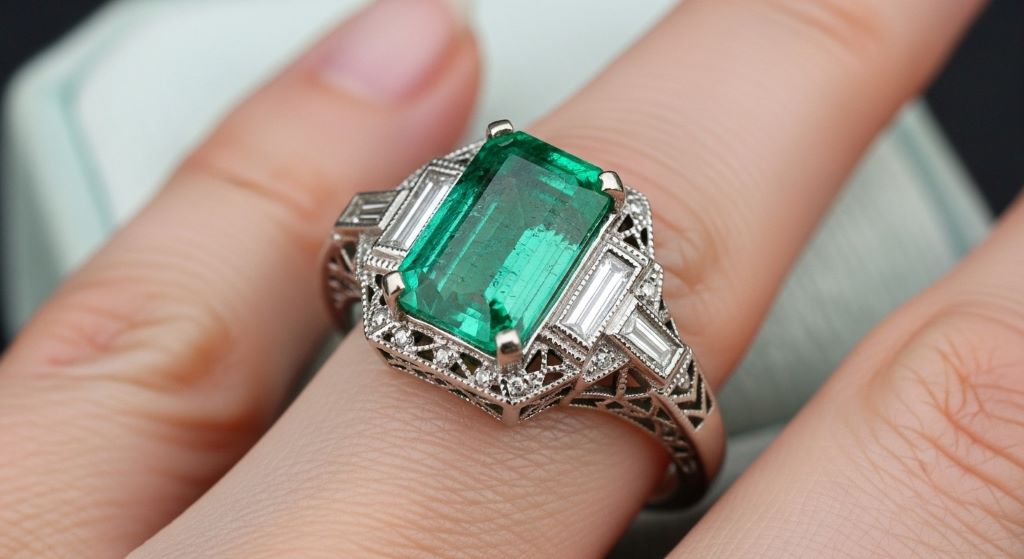
Cut quality determines how light interacts with your emerald. A well-cut stone maximizes color and brilliance while minimizing the visibility of inclusions. The classic emerald cut, with its rectangular shape and stepped facets, was actually designed specifically for this gemstone. This cut protects the stone’s corners and showcases its color beautifully.
Carat weight affects price dramatically, but bigger isn’t always better. A smaller emerald with superior color and clarity often appears more beautiful than a larger stone with poor qualities. Consider the overall visual impact rather than focusing solely on size. Additionally, larger emeralds become exponentially more expensive due to their rarity.
Exploring Vintage Engagement Styles
Vintage-inspired designs bring timeless elegance to emerald engagement rings. These styles draw from specific historical periods, each offering distinct characteristics that appeal to different tastes. Understanding these eras helps you identify designs that resonate with your personal aesthetic.
Art Deco designs from the 1920s and 1930s feature geometric patterns, bold lines, and striking symmetry. These rings often incorporate diamond accents in angular arrangements that complement the emerald’s rectangular shape. The style emphasizes clean, modern lines despite its historical origins, creating a look that feels both classic and contemporary.
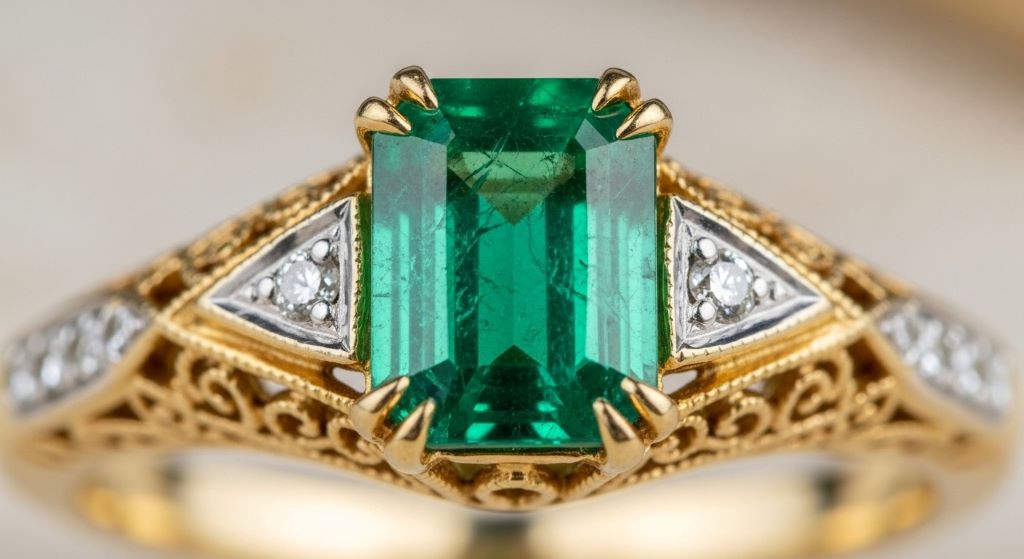
Victorian era rings, popular from the 1830s to 1900s, showcase intricate metalwork and romantic details. These designs often feature ornate filigree, milgrain edging, and nature-inspired motifs. Yellow gold was the predominant metal choice, creating warm contrast against the emerald’s cool green tones. Victorian rings tend to have a delicate, feminine appearance.
Edwardian designs from the early 1900s brought refinement and sophistication to jewelry. These rings typically feature platinum settings with lacy, intricate details. The combination of emeralds with diamonds in flowing, elegant patterns creates pieces that appear both substantial and delicate. Edwardian rings often include elaborate gallery work underneath the center stone.
Mid-century modern styles from the 1940s through 1960s emphasize bold, sculptural forms. These rings feature innovative settings and unexpected design elements. The period embraced both minimalist and dramatic approaches, giving you flexibility in choosing between understated elegance and eye-catching designs.
Retro designs from the 1940s showcase substantial gold settings with architectural elements. These rings often feature large, bold designs with curved lines and dimensional details. The style creates a powerful presence on the hand, perfect for those seeking a dramatic statement piece.
Selecting the Perfect Setting
The setting you choose protects your emerald while showcasing its beauty. Different setting styles offer varying levels of security and aesthetic appeal. Your lifestyle and personal preferences should guide this important decision.
Bezel settings surround the emerald with a metal rim, offering excellent protection. This style works particularly well for emeralds because it shields vulnerable edges from impact. Modern bezel settings can be sleek and minimalist, while vintage-inspired versions add decorative details to the surrounding metal. This setting suits active lifestyles and provides peace of mind.
Prong settings use metal claws to secure the stone, allowing maximum light exposure. Traditional four-prong settings work well, but six-prong options offer additional security. Since emeralds are softer than diamonds, consider using V-shaped prongs at the corners to protect these vulnerable points. Prong settings showcase the emerald beautifully but require regular maintenance to ensure prongs stay tight.
Halo settings feature small diamonds or gemstones surrounding the center emerald. This design adds sparkle and makes the emerald appear larger. Halos can be round, cushion-shaped, or follow the emerald’s rectangular outline. Additionally, double halos create even more impact for those seeking maximum glamour.
Three-stone settings place smaller stones on either side of the center emerald. These accent stones can be diamonds, smaller emeralds, or other complementary gems. The design symbolizes past, present, and future, adding meaningful symbolism to your ring. Three-stone settings work beautifully with vintage engagement styles and create balanced visual appeal.
Cathedral settings elevate the emerald above the band using arched metalwork underneath. This architectural detail adds dimension and elegance while protecting the stone from side impacts. Cathedral settings often incorporate additional diamonds or decorative elements in the supporting arches.
Choosing Metal Types
The metal you select for your ring affects both appearance and durability. Different metals complement emeralds in unique ways, and each offers distinct advantages. Consider both aesthetic preferences and practical factors when making this choice.
Platinum provides the most durable option for emerald rings. Its natural white color never fades and won’t discolor the emerald. Platinum holds stones securely and wears down slowly over time. However, it’s the most expensive metal choice. The substantial weight of platinum creates a luxurious feel on the hand.
White gold offers a similar appearance to platinum at a lower price point. It’s created by mixing yellow gold with white metals and coating it with rhodium plating. The plating eventually wears off and requires periodic replating to maintain the bright white finish. White gold provides an excellent balance of beauty and affordability.
Yellow gold creates warm contrast against emerald’s cool green tones. This classic combination has timeless appeal and works particularly well with vintage-inspired designs. Gold is softer than platinum, so higher karat options like 18k offer better color but less durability than 14k. Yellow gold requires less maintenance than white gold since it doesn’t need replating.
Rose gold has gained popularity for its romantic, vintage appearance. The pinkish tone creates an unexpected and beautiful combination with emerald green. This metal choice makes a distinctive statement and works especially well for those seeking something different from traditional options. Rose gold contains copper, which gives it the characteristic color and added durability.
Two-tone designs combine different metals for added visual interest. These rings might feature a yellow gold band with white gold or platinum prongs. The combination allows you to enjoy multiple metal colors while creating a unique look. Two-tone settings work particularly well with vintage engagement styles that traditionally featured mixed metals.
Evaluating Emerald Treatments
Most emeralds undergo treatments to enhance their appearance. Understanding these processes helps you make informed decisions and properly care for your ring. Transparency about treatments is essential when purchasing an emerald engagement ring.
Oil or resin filling is the most common emerald treatment. Manufacturers use colorless oils or resins to fill surface-reaching fractures, improving clarity and stability. This treatment is accepted industry-wide and doesn’t significantly affect value. However, filled emeralds require special care during cleaning and should never be exposed to heat or ultrasonic cleaners.
The type of filling material matters. Traditional cedar oil is relatively stable but can eventually dry out and need reapplication. Modern synthetic resins provide more permanent results but may react differently to environmental factors. Ask your jeweler about the specific treatment used and any special care requirements.
Untreated emeralds are exceptionally rare and command premium prices. If someone offers an untreated emerald at a suspiciously low price, it’s likely either treated or not a genuine emerald. Reputable jewelers will provide documentation about treatments and source information for valuable stones.
Color enhancement treatments exist but are less common and should be disclosed. These processes permanently alter the emerald’s color through irradiation or other methods. While not necessarily problematic, undisclosed color treatments constitute fraud. Always purchase from reputable dealers who provide full disclosure about any treatments applied.
Considering Size and Proportion
Finding the right size emerald involves balancing visual impact with wearability and budget. The stone should complement your hand size and personal style without becoming impractical for everyday wear.
Hand size influences how different stone sizes appear. Smaller hands can be overwhelmed by very large emeralds, while larger hands may make modest stones appear diminutive. Generally, emeralds between one and three carats provide a beautiful presence on most hand sizes. Try on different sizes to see what feels and looks right for you.
Band width should complement the center stone size. A large emerald on a delicate band appears unbalanced, while a small stone on a wide band loses visual impact. The band typically measures between 1.5 and 3 millimeters wide, with broader bands supporting larger stones.
Finger length affects proportions as well. Longer fingers can accommodate larger stones and longer shapes, while shorter fingers often look better with smaller to medium stones. The emerald cut’s rectangular shape can either elongate or overwhelm shorter fingers depending on orientation and size.
Lifestyle considerations matter when choosing size. Very large emeralds sit higher on the finger and catch on clothing or objects more easily. If you work with your hands or lead an active lifestyle, consider a lower profile setting with a more modest stone size that won’t interfere with daily activities.
Budget constraints often determine size, but remember that quality trumps quantity. A smaller, high-quality emerald creates more impact than a larger stone with poor color or excessive inclusions. Prioritize color and clarity over size for the most beautiful result.
Incorporating Additional Stones
Accent stones enhance emerald engagement rings while adding sparkle and color complexity. The type and arrangement of additional stones significantly influence the ring’s overall appearance and style.
Diamonds are the most popular accent choice, providing brilliant contrast to the emerald’s rich color. White diamonds create classic elegance, while colored diamonds offer unique combinations. The sparkle of diamonds draws attention to the emerald while adding light and dimension to the design.
Smaller emeralds as accent stones create a cohesive green gemstone ring design. This approach works beautifully in three-stone settings or channel-set bands. Using emeralds throughout the ring creates bold color impact perfect for those who love green stones.
Sapphires complement emeralds surprisingly well. Blue sapphires create a cool, jewel-tone palette, while pink or yellow sapphires add unexpected warmth. Mixed gemstone designs allow for creative expression and unique combinations you won’t find in traditional jewelry stores.
Accent stone arrangement affects the ring’s character. Pavé settings feature tiny stones covering the band in a glittering blanket. Channel settings protect accent stones within the band’s metal for a sleeker appearance. Side stones add focus to the center emerald without overwhelming it.
The ratio between center stone and accent stones requires careful consideration. Accents should enhance rather than compete with the emerald. Generally, accent stones measure one-quarter to one-half the size of the center stone, though artistic designs may vary these proportions intentionally.
Understanding Emerald Origins
Emerald origins influence color characteristics, quality, and price. While beautiful emeralds come from multiple locations worldwide, certain sources have established reputations for exceptional stones.
Colombian emeralds are considered the finest by many experts. These stones typically display pure, vivid green with slight blue undertones and excellent transparency. Colombian mines, particularly Muzo and Chivor, have produced emeralds for centuries. The country’s emeralds often command premium prices due to their exceptional quality.
Zambian emeralds offer rich, deep color with slightly more blue than Colombian stones. These emeralds typically have higher clarity and fewer inclusions than Colombian counterparts. Zambian stones provide excellent value and are gaining recognition for their beauty and quality.
Brazilian emeralds tend toward lighter, yellower greens. While generally less expensive than Colombian stones, Brazilian emeralds can be quite beautiful and offer good value. The lighter color appeals to those who prefer more subtle green tones.
Afghan and Pakistani emeralds display intense, saturated color. These stones often contain more inclusions but can be exceptionally beautiful. Their bold color makes them popular for those seeking dramatic green gemstone rings.
Origin matters less than individual stone quality. A beautiful Zambian emerald outshines a poor-quality Colombian stone every time. Focus on the specific emerald’s appearance rather than being swayed solely by origin, though provenance can add to the stone’s story and value.
Practical Maintenance Considerations
Emeralds require special care to maintain their beauty. Understanding proper maintenance ensures your engagement ring stays beautiful for decades. These care requirements shouldn’t discourage you but should inform how you wear and maintain your ring.
Daily wear requires mindfulness. Remove your ring during activities that could damage it, including exercising, cleaning, gardening, or any task involving harsh chemicals or impact. Emeralds are relatively soft compared to diamonds and can chip or scratch more easily.
Cleaning should be gentle and careful. Use lukewarm water with mild soap and a soft brush. Never use ultrasonic cleaners or steamers, as these can damage the oils or resins filling your emerald. Harsh chemicals, including household cleaners, can also harm the stone or its setting.
Professional maintenance is essential. Have your ring inspected every six months to ensure prongs remain tight and settings stay secure. Jewelers can also check whether your emerald needs reoiling, a process that refreshes the filler in surface fractures and restores optimal appearance.
Insurance protects your investment. Emerald engagement rings should be appraised and insured against loss, theft, or damage. Keep documentation about your stone’s quality, treatments, and value. Update appraisals every few years as market values change.
Storage matters when you’re not wearing your ring. Keep it separate from other jewelry to prevent scratching. A soft cloth pouch or individual compartment in a jewelry box provides adequate protection. Avoid extreme temperature changes or prolonged sun exposure.
Budget Planning Strategies
Emerald engagement rings are available at various price points. Strategic planning helps you maximize value while staying within budget. Understanding cost factors allows you to make smart compromises without sacrificing beauty.
Priority assessment determines where to invest your budget. Spend more on color quality, as this factor most significantly impacts beauty. A slightly smaller emerald with exceptional color surpasses a large stone with poor color. Clarity can be compromised somewhat since inclusions are expected and accepted in emeralds.
Setting complexity affects total cost significantly. Simple solitaire settings cost less than elaborate halo designs or vintage engagement styles with intricate details. However, don’t skimp on setting quality, as proper construction protects your emerald investment. Consider starting with a simpler setting and upgrading later if budget permits.
Timing your purchase can impact price. Jewelry stores often have sales during certain seasons or holidays. However, don’t let a sale pressure you into buying an inferior stone. Quality matters more than getting a discount on something that doesn’t meet your standards.
Custom versus ready-made involves trade-offs. Custom designs allow perfect personalization but typically cost more. Ready-made rings offer immediate gratification and potentially lower prices. Many jewelers also offer semi-custom options where you select a setting and choose your emerald separately.
Alternative approaches expand possibilities. Consider smaller jewelers or estate pieces for unique vintage engagement styles at competitive prices. Online retailers often offer lower prices than traditional stores, though you sacrifice the ability to see stones in person before purchasing.
Making the Final Selection
After considering all factors, making your final choice involves both analytical assessment and emotional response. The perfect emerald engagement ring speaks to your heart while meeting practical requirements.
Compare multiple options before deciding. Look at emeralds in different settings and lighting conditions. Natural daylight reveals truest color, while artificial light can mask or enhance certain characteristics. See how each stone appears in various environments.
Trust your instinct about color preference. Some people prefer bluer greens, while others love yellower tones. The “best” emerald is the one whose color appeals most to you personally. Don’t let others’ preferences override your own taste.
Assess the complete ring, not just the stone. How do all elements work together? Does the setting enhance the emerald’s beauty? Will the design remain appealing over decades? Consider your lifestyle and whether the ring suits how you’ll wear it.
Request documentation for everything. Obtain certificates describing your emerald’s characteristics, treatments, and origin when available. Get detailed receipts listing specifications. This information proves valuable for insurance and future appraisals.
Take time with this decision. Engagement rings are worn daily for years, so choosing carefully matters. However, don’t let perfectionism paralyze you. At some point, you need to commit to a beautiful ring that makes you happy.
Conclusion
Choosing an emerald engagement ring for a bold look involves understanding quality factors, exploring design options, and considering practical aspects. These stunning green gemstone rings offer a unique alternative to traditional diamonds, allowing you to express individuality and style. The vibrant color and rich history of emeralds create meaningful symbolism for your commitment.
Vintage engagement styles provide timeless elegance that complements emeralds beautifully. Whether you prefer Art Deco geometry, Victorian romance, or mid-century boldness, these designs offer options for every taste. The right setting protects your emerald while showcasing its beauty, and selecting appropriate metals ensures your ring looks exactly as you envision.
Understanding emerald treatments, origins, and maintenance requirements prepares you for responsible ownership. These considerations don’t diminish the appeal of emerald rings but instead help you make informed decisions and properly care for your investment. With proper selection and maintenance, your emerald engagement ring will remain beautiful for generations.
Ultimately, the perfect emerald engagement ring balances personal preference with practical considerations. Take time to explore options, compare stones, and find a ring that speaks to your heart. Your boldness in choosing an emerald reflects confidence and individuality that will be admired for years to come.
Frequently Asked Questions
Are emerald engagement rings durable enough for everyday wear?
Yes, emerald engagement rings can be worn daily with proper care and precautions. While emeralds are softer than diamonds, ranking 7.5 to 8 on the Mohs scale, appropriate settings and mindful wear make them perfectly suitable for engagement rings. Choose protective settings like bezels or V-prongs at corners, remove your ring during activities that could cause impact, and have it professionally inspected regularly. Many historical examples of emerald engagement rings have survived centuries with proper care.
How much should I expect to spend on an emerald engagement ring?
Emerald engagement ring prices vary widely based on stone quality, size, and setting complexity. You can find beautiful options starting around two thousand dollars, while exceptional stones in elaborate settings may cost tens of thousands. Generally, emeralds cost less per carat than comparable diamonds, allowing you to get a larger or higher-quality stone for your budget. Focus on color quality first, as this factor most significantly impacts both beauty and value.
Can I resize an emerald engagement ring later?
Most emerald engagement rings can be resized, though the process requires extra care due to the stone’s sensitivity to heat. Prong-set rings are typically easier to resize than bezel or tension settings. Always use an experienced jeweler familiar with working on emerald jewelry. Some complex vintage-inspired designs with intricate details may be difficult or impossible to resize, so discuss this possibility before purchasing if you anticipate needing size adjustments.
How do I know if my emerald is genuine?
Genuine emeralds display characteristic inclusions called jardin, visible under magnification. Most natural emeralds show these internal features, while synthetic stones often appear too perfect. Purchase from reputable jewelers who provide certification and guarantees of authenticity. Gemological laboratories can definitively identify emeralds and provide documentation of their characteristics. Be suspicious of perfect-looking emeralds at prices that seem too good to be true, as these may be synthetic or imitations.
What metal color looks best with emerald engagement rings?
All metal colors complement emeralds beautifully, making this a personal preference decision. Yellow gold creates classic, warm contrast against emerald’s cool green tones and works wonderfully with vintage styles. White metals like platinum or white gold provide modern elegance and make the green appear more vibrant. Rose gold offers romantic, unique appeal that’s gained popularity recently. Consider which metal you typically wear and what matches your existing jewelry for the most cohesive look.
Related Topics:
The Romance of Vintage Engagement Rings: A Timeless Choice for Modern Brides
Classic Wedding Dresses That Never Go Out of Style