0
0
 0
0
Chola culture and identity in the 1990s were far more than a fashion trend; they became a powerful grassroots language of Latina empowerment for Chicana women growing up in American barrios. Through bold style, attitude, and community, Cholas turned everyday clothing and makeup into a visible statement against racism, sexism, and the marginalization of their communities.
Roots of Chola Culture and Identity
To understand Chola culture and identity in the 90s, it helps to look back to earlier Mexican American youth movements, especially the pachuca subculture of the 1940s and 1950s. Pachucas were Mexican American women who used zoot suits, pants, and dramatic hairstyles to challenge both white American norms and conservative gender expectations in their own communities. This early “folk feminism” laid the foundation for later Chicana styles that embraced resistance through style instead of silent conformity.
By the 1960s and 1970s, this rebellious energy evolved into the cholo and chola subculture, centered in working-class Mexican American neighborhoods across the U.S. Southwest. By the 1990s, the Chola had become a recognizable figure in Southern California and other barrios: a young Chicana navigating gang presence, economic hardship, and discrimination, while expressing pride through a distinct look and attitude.
90s Chola Style: More Than Aesthetic
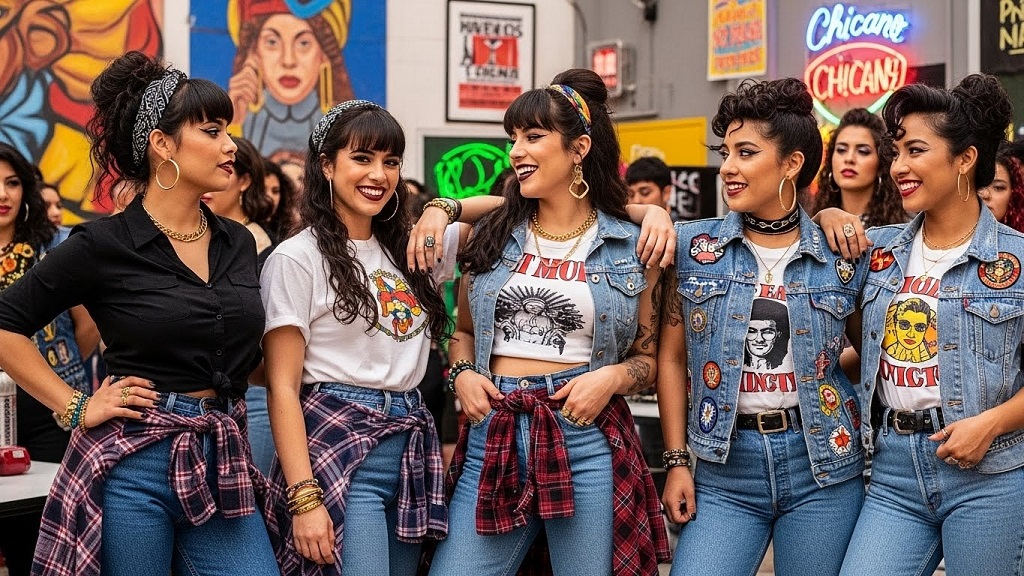
The classic 90s Chola look is instantly recognizable: thin or dark-lined lips, heavy eyeliner, bold brows, hoop earrings, and a mix of oversized and fitted clothing. Outfits often included baggy Dickies or khaki pants, oversized plaid shirts (sometimes buttoned only at the top), white tank tops, Nike Cortez sneakers, and hair styled in high bangs or gelled baby hairs.
On the surface, this might seem like a fashion aesthetic, but for many Chicana women it functioned as armor and identity at the same time. Dressing as a Chola in the 90s could mark you as part of a marginalized community that faced heavy policing and stereotyping, yet it also offered belonging, protection, and a sense of dignity in neighborhoods shaped by poverty and systemic racism.
Fashion as Resistance for Marginalized Communities
For Chicanas in the 90s, style became a form of everyday resistance in spaces where their bodies and voices were routinely devalued. Choosing this look meant refusing to soften or erase one’s barrio identity to fit into mainstream, white, middle-class standards of femininity and respectability.
This resistance through style worked on multiple levels:
-
It challenged beauty norms that centered whiteness, light skin, and “polished” professionalism.
-
It rejected the idea that Latina women had to be quiet, domestic, and submissive.
-
It turned the streets, schools, and lowrider scenes into stages where Cholas could assert power and presence.
Because of these layers, 90s Chola fashion became a visible political statement long before many of these young women ever read feminist theory. Their look signaled solidarity with other marginalized communities of color who were also using fashion, music, and art to push back against exclusion.
Latina Empowerment in the Barrio
Chola culture and identity offered many Chicanas a pathway to Latina empowerment rooted in their own lived realities rather than in elite or academic spaces. Within crews, families, and neighborhoods, homegirls often served as leaders, protectors, and emotional anchors, despite being stereotyped as “troublemakers” or hypersexualized by mainstream media.
Key aspects of this empowerment included:
-
Pride in speaking Spanglish, listening to oldies and Chicano rap, and celebrating barrio life instead of hiding it.
-
Sisterhood and loyalty among homegirls, who often supported each other through violence, policing, and family struggles.
-
A fierce, unapologetic attitude that told the world they would not shrink themselves to be acceptable to institutions that rarely protected them.
In this context, Latina empowerment was not a buzzword; it was survival, self-definition, and love for one’s people, expressed through everyday choices in clothing, hair, and makeup.
How Media Shaped (and Distorted) the Chola Image
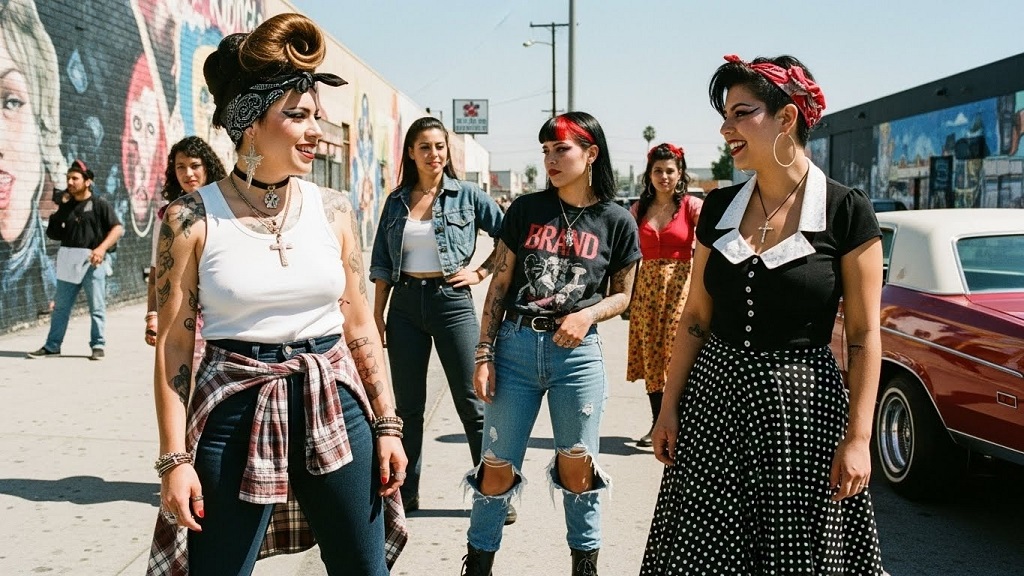
By the 1990s, films, music videos, and magazines began to circulate images of Cholas across the U.S. and internationally. Movies like “Mi Vida Loca” and “Selena,” along with lowrider culture coverage, brought Chicana style to wider audiences. This visibility helped some young Latinas see themselves represented, but it also created one-dimensional stereotypes.
Mainstream portrayals often reduced Chola culture and identity to a “gang girl” caricature or turned Cholas into exotic side characters rather than complex protagonists. As the look spread, non-Latinas sometimes copied the aesthetic without understanding the history of discrimination, police violence, and community struggle behind it. This raised ongoing debates about cultural appropriation versus appreciation, especially when people outside marginalized communities profited from the style while remaining detached from the risks and stigma that Chicanas faced.
Chola Style as Folk Feminism
Scholars and cultural critics often describe Chola and pachuca style as a form of “folk feminism” emerging from working-class barrios. Rather than starting in universities or political organizations, it grew out of everyday critiques of machismo, racism, and classism voiced by young women trying to claim space in the streets and at home.
Chola fashion in the 90s expressed this folk feminism by:
-
Using “hard” or “masculine” elements like baggy clothes to protect against harassment and reframe femininity as strong, not fragile.
-
Maintaining dramatic makeup and jewelry to show that toughness and glamour could coexist in one body.
-
Signaling autonomy from both patriarchal expectations within their own communities and the white gaze outside them.
This blend of toughness and beauty made Chola identity deeply influential for later generations of Latinas who sought to define empowerment on their own terms.
The Politics of Being Criminalized for Style
A crucial part of understanding Chola culture and identity is recognizing how heavily it has been criminalized. In many cities, young people in Cholo/Chola style were automatically labeled as gang members, leading to harassment, surveillance, and unequal treatment in schools and public spaces. Authorities and media frequently used clothing, tattoos, and hairstyles as markers of criminality, a practice that disproportionately targeted marginalized communities and reinforced systemic racism.
For Chicanas, this criminalization added a gendered layer: they were policed not only as potential criminals but also as women who refused to behave “properly.” Choosing the Chola look in the 90s meant knowingly accepting that institutions might see you as dangerous or deviant based solely on your appearance, which made the act of dressing that way even more politically charged.
Legacy and Modern Reinterpretations
Today, the influence of 90s Chola style reaches far beyond Southern California. Fashion designers, musicians, and influencers reference the aesthetic, sometimes with love and connection, other times in ways that flatten its meaning. Global scenes, such as Japanese fans of Chicano lowrider culture, have adopted elements of the style, sparking conversations about cross-cultural admiration and the boundaries of respectful borrowing.
Many contemporary Chicanas and Xicanas continue to reclaim Chola culture and identity as a symbol of pride and resistance. They emphasize storytelling, community projects, and Latina-owned brands that center the voices of those who grew up in these neighborhoods, pushing back against superficial trends that erase the struggle behind the look.
FAQs about Chola Culture and Identity
What is Chola culture and identity?
Chola culture and identity refer to a Chicana subculture, especially visible from the 1960s onward, in which Mexican American women in working-class barrios developed a distinct style, attitude, and community to navigate racism, poverty, and patriarchy. By the 1990s, “Chola” commonly described young Chicanas whose fashion and demeanor symbolized resistance, pride, and survival in marginalized communities.
Why was Chola fashion so important in the 1990s?
In the 90s, Chola fashion visually represented the realities of barrio life and gave Chicanas a way to assert dignity in a society that often stereotyped or ignored them. Clothing, makeup, and accessories became tools for resistance through style, turning personal appearance into a public claim to space, identity, and voice.
How did Chola culture empower Latina women?
Chola culture empowered Latina women by validating their experiences in marginalized communities and transforming them into sources of strength and pride. Through homegirl networks, shared style, and a refusal to assimilate, Cholas created a form of Latina empowerment rooted in solidarity, self-protection, and unapologetic self-expression.
Is it cultural appropriation to dress like a Chola?
Wearing Chola-inspired fashion without connection to or respect for the Chicano community, and without acknowledging the discrimination tied to that look, is often criticized as cultural appropriation. Many Chicanas argue that the style should be engaged with thoughtfully, honoring its history in marginalized communities rather than using it as a disposable aesthetic.
How is Chola style viewed today?
Today, Chola style is both celebrated and contested: it inspires fashion and media, yet it is still sometimes stigmatized or misrepresented. Many contemporary Chicana creators work to preserve its roots as a symbol of resistance, community, and Latina empowerment, while educating others about its deeper meaning beyond trend cycles.
Call to Action
If this exploration of Chola culture and identity in the 90s resonated with you, take the next step by supporting voices from the communities that created this powerful style. Share this article, uplift Chicana artists and writers, and start conversations about how fashion can still be a tool for resistance through style and Latina empowerment today.
Related Topics: Deciphering the Posh Look: Fabrics of Victoria Beckham’s Fashion Empire
Related Topics: Zendaya’s Cinderella Moment: Was the Dress Fit for a Princess?