

 0
0
 0
0
There’s something incredibly satisfying about creating useful items with your own two hands. In a world leaning towards sustainability and mindful crafting, knitting dishcloths has surged in popularity. They’re not just practical kitchen essentials; they’re small canvases for creativity, perfect beginner projects, and wonderful, eco-friendly alternatives to disposable sponges and synthetic cloths. Best of all? You don’t need to spend a fortune to get started. Plenty of fantastic, free knit dishcloth patterns are available online, waiting for you to cast on!
Whether you’re a seasoned knitter looking for a quick, satisfying project or a complete novice eager to learn the basics, knitting dishcloths is a rewarding endeavor. They make thoughtful handmade gifts, add a personal touch to your kitchen, and help reduce household waste. Let’s dive into the wonderful world of knitted dishcloths, exploring why you should make them, what you’ll need, and where to find that perfect free knit dishcloth pattern to begin your journey.
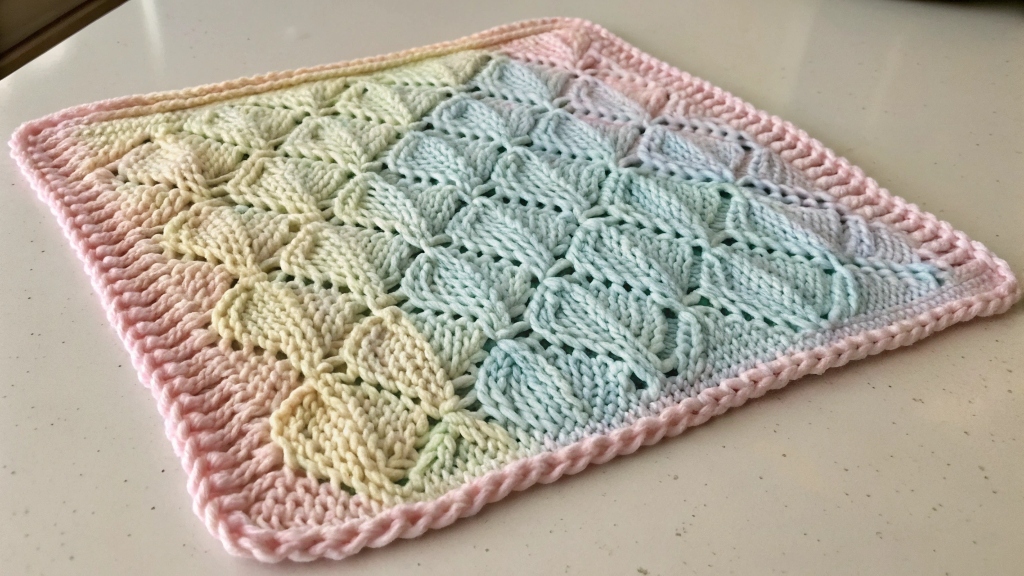
Why Take the Time to Knit Your Own Dishcloths?
You might wonder, “Why knit a dishcloth when I can just buy one?” The reasons are surprisingly compelling, blending practicality with personal satisfaction and environmental consciousness.
First, knitted dishcloths, especially those made from cotton, are workhorses in the kitchen. The textured stitches create gentle friction, perfect for scrubbing away grime from dishes and countertops without being abrasive. Unlike flimsy disposable wipes or sponges that quickly harbor bacteria and end up in landfills, a well-knit cotton dishcloth is durable and built to last through countless washes.
Speaking of washing, knitted dishcloths are incredibly hygienic. You can toss them in the washing machine with your regular laundry (hot water is usually recommended for cotton) and even tumble dry them. Having a stack means you can use a fresh cloth daily, minimizing bacterial growth and unpleasant smells often associated with kitchen sponges.
From an environmental perspective, choosing to knit and use cotton dishcloths is a significant step. Most conventional sponges and many cleaning cloths are made from plastics. Every time they’re used and washed, they shed microplastic particles that find their way into our waterways and ecosystems. Cotton, a natural fiber, avoids this issue. At the end of its long life, a 100% cotton dishcloth can even be composted, returning to the earth instead of contributing to landfill waste.
Beyond the practicalities, knitting dishcloths is fantastic for skill-building. They are the perfect small project for beginners to practice fundamental stitches like knit and purl, learn about tension, and get comfortable handling yarn and needles. Even if your first attempt isn’t perfectly square or has a few uneven stitches, it will still wash dishes effectively! For more experienced knitters, they offer a quick palate cleanser between larger projects or a chance to experiment with new stitch patterns without committing to a massive garment. Plus, they’re incredibly portable.
Finally, consider the cost-effectiveness and gift potential. A single ball of cotton yarn can often yield two or more dishcloths, making it an economical choice. And who wouldn’t appreciate a set of beautiful, handmade dishcloths? Bundled with nice soap or other kitchen goodies, they make thoughtful, practical gifts for housewarmings, holidays, or just because.
Choosing the Right Yarn and Needles
Selecting the appropriate materials is crucial for creating functional and long-lasting dishcloths. While you can technically knit with almost any yarn, certain fibers perform much better for this specific task.
Yarn Fiber: The undisputed champion for dishcloths is 100% cotton. Why?
- Absorbency: Cotton excels at soaking up water, which is essential for washing and wiping.
- Durability: It withstands repeated scrubbing, wringing, and washing without falling apart quickly. Cotton is actually stronger when wet.
- Washability: Cotton can typically handle machine washing in hot water (60°C/140°F is often recommended for sanitizing) and machine drying, crucial for kitchen hygiene.
- Firmness: It doesn’t stretch excessively out of shape like some other fibers might when wet and under stress.
- No Microplastics: As a natural fiber, it won’t shed harmful microplastics.
Popular choices include brands like Lily Sugar’n Cream, Peaches & Creme, and KnitPicks Dishie. These are affordable, widely available, and come in a vast array of colors. Mercerized cotton (like Lion Brand 24/7 Cotton) is another excellent option; the mercerization process makes the cotton stronger, smoother, more lustrous, and less likely to shrink, though it might feel slightly less absorbent initially than unmercerized cotton. Cotton/bamboo blends are also viable, offering good absorbency and strength, often with a softer feel.
Yarns to generally avoid for dishcloths include acrylic (it’s plastic, not absorbent, can melt with heat, and sheds microplastics) and wool (it doesn’t hold up well to constant friction and washing, can felt, and may retain odors).
Yarn Weight: Worsted weight cotton is the most common and arguably the best choice. It creates a fabric that’s substantial enough for scrubbing but not overly bulky. DK (Double Knitting) weight can also work, resulting in a slightly lighter cloth.
Needle Size: The needle size depends on your chosen yarn weight and personal tension. For worsted weight cotton, US size 6 (4.0 mm), 7 (4.5 mm), or 8 (5.0 mm) needles are typically recommended. Using a slightly smaller needle than suggested on the yarn label can create a denser, more durable fabric, which is desirable for dishcloths. However, gauge (the number of stitches and rows per inch) isn’t super critical for dishcloths – unlike sweaters, a slight size variation won’t matter much. The goal is to create a fabric you like the feel of, that isn’t too loose or holey. Straight needles work perfectly well, but you can also use circular needles to knit flat if you prefer.
Basic Knitting Stitches You’ll Need
The beauty of many free knit dishcloth patterns is their simplicity. Often, you only need to know a few fundamental techniques:
- Cast On (CO): This is how you get the initial stitches onto your needle to start the project. There are many methods (like the long-tail cast-on or knitted cast-on), and beginner patterns or tutorials will usually guide you.
- Knit Stitch (k): The most basic stitch in knitting. It creates a ‘V’ shape on the front of the fabric (stockinette). When worked on every row, it produces Garter Stitch fabric, which is reversible, stretchy, and nicely textured – perfect for dishcloths!
- Purl Stitch (p): The reverse of the knit stitch, creating a horizontal ‘bump’ on the side facing you. Alternating knit and purl rows creates Stockinette Stitch (smooth ‘V’s on one side, bumps on the other). Alternating knit and purl stitches within the same row creates textured patterns like Seed Stitch or Ribbing.
- Bind Off (BO) / Cast Off: This secures the live stitches at the end of your project so they don’t unravel. Like casting on, there are various methods, but a basic bind-off is usually sufficient for dishcloths. Try to bind off loosely so the edge doesn’t pucker.
- Yarn Over (yo): Used in some patterns (like diagonal or lace patterns) to create a small hole or eyelet, often as part of an increase or decorative element.
- Increase (inc): Making more stitches. Methods include knitting into the front and back of a stitch (kfb) or making one (m1). Used in diagonal patterns to widen the cloth.
- Decrease (dec): Making fewer stitches. Common methods include knitting two stitches together (k2tog) or slipping stitches and knitting them together (ssk or skp). Used in diagonal patterns to narrow the cloth.
Don’t be intimidated! Most beginner dishcloth patterns rely heavily on just the knit stitch (Garter Stitch) or simple combinations of knit and purl. Online video tutorials are excellent resources for learning these techniques visually.
A Simple & Free Knit Dishcloth Pattern: Classic Garter Stitch
Ready to try your first one? This pattern uses only the knit stitch, creating a wonderfully textured and durable Garter Stitch dishcloth. It’s about as easy as it gets!
Materials:
- Approx. 50-60 yards (45-55 meters) of worsted weight 100% cotton yarn (like Lily Sugar’n Cream – one ball makes about two cloths)
- US Size 7 (4.5 mm) knitting needles (or size needed to get a fabric you like)
- Scissors
- Darning needle (for weaving in ends)
Gauge: Not critical, but approx. 4 stitches per inch in Garter Stitch.
Finished Size: Approx. 8-9 inches (20-23 cm) square.
Instructions:
- Cast On: Cast on 35 stitches (or adjust for desired width – fewer for smaller, more for larger).
- Row 1: Knit all stitches across the row.
- Row 2: Knit all stitches across the row.
- Repeat Row 2: Continue knitting every stitch of every row until the piece measures approximately the same length as its width, forming a square (around 8-9 inches from the cast-on edge). Garter stitch fabric looks the same on both sides.
- Bind Off: Bind off all stitches loosely (knitting the stitches as you bind off).
- Finishing: Cut the yarn, leaving a 6-inch tail. Using the darning needle, weave the starting and ending tails securely back into the fabric of the dishcloth to hide them and prevent unraveling. Trim any excess yarn.
That’s it! You’ve knitted a dishcloth. Feel free to experiment by adding stripes with different colors or adjusting the number of cast-on stitches for different sizes.
Exploring Other Free Knit Dishcloth Patterns
Once you’ve mastered the basic Garter Stitch, a whole world of textures and designs opens up. Many free knit dishcloth patterns introduce slightly more complex stitches that are still very achievable:
- Diagonal Garter Stitch (Grandma’s Favorite): This popular pattern is worked corner-to-corner. You start with just a few stitches, increase on every row (often using yarn overs near the edge) until the sides reach the desired length, and then decrease on every row until you’re back to a few stitches. It creates a diagonal texture and is often said to stretch less than standard squares. Search for “free diagonal knit dishcloth pattern” or “Grandma’s favorite dishcloth pattern.”
- Seed Stitch: This involves alternating knit and purl stitches (K1, P1) across the row. On the next row, you knit the purls and purl the knits. It creates a lovely, bumpy, reversible texture that’s great for scrubbing.
- Basketweave: By alternating blocks of knit stitches and purl stitches (e.g., K4, P4 for 4 rows, then P4, K4 for 4 rows), you create a woven appearance.
- Waffle Stitch: This uses a combination of knit and purl stitches over a few rows to create a textured, absorbent fabric resembling a waffle.
- Moss Stitch (American Moss) / Double Moss Stitch (Irish Moss): Similar to seed stitch but with different repeats (e.g., K2, P2 across, repeating that row, then P2, K2 across for two rows). Creates lovely, non-curling textured fabrics.
- Simple Lace or Eyelets: Some patterns incorporate simple yarn overs and decreases to create decorative holes, adding a bit of flair without being overly complicated.
Where to Find More Patterns:
- Ravelry: An enormous database of knitting and crochet patterns, many of which are free. You can filter by craft, availability (free), category (cleaning -> dishcloth), yarn weight, difficulty, and more.
- Yarn Company Websites: Brands like Yarnspirations (home of Lily Sugar’n Cream, Bernat), Lion Brand, Premier Yarns, and WEBS (yarn.com) offer vast libraries of free patterns, including many dishcloths.
- Knitting Blogs & Websites: Many designers and knitting enthusiasts share free patterns on their blogs. Sites like AllFreeKnitting.com, Nourish and Nestle, Just Be Crafty, and Brome Fields often feature easy and popular dishcloth designs.
Tips for Knitting Perfect Dishcloths
While dishcloths are forgiving projects, a few tips can enhance the process and the final product:
- Stick to Cotton: It really is the best fiber for the job due to its absorbency and durability.
- Consistent Tension: Try to keep your stitches relatively even. If your knitting is too loose, the cloth might be floppy and less effective; too tight, and it might be stiff. Practice helps!
- Weave Ends Securely: Dishcloths go through a lot of wear and washing. Weave your starting and ending yarn tails in securely (go back and forth in different directions) so they don’t pop out after a few washes.
- Consider a Hanging Loop: If you like to hang your dishcloths to dry, you can easily add a loop. When binding off, leave the last stitch on the needle, chain crochet about 10-15 stitches using your fingers or a crochet hook, and slip stitch back into the corner stitch before fastening off. Alternatively, knit an I-cord loop separately and sew it on.
- Wash Before First Use: Give your new dishcloth a wash to remove any residue from the manufacturing process and to allow the cotton fibers to bloom slightly.
- Care Routine: Rinse well after each use, wring out thoroughly, and hang to dry completely to discourage bacterial growth and odors. Machine wash frequently in hot water. If cloths get stained or smelly, boiling them for 10-15 minutes or soaking in an oxygen bleach solution can help sanitize and deodorize them.
Read More Also: How to Dress Down a Sequin Blazer: A Complete Guide to Effortless Style
People Also Ask (FAQs)
Here are some common questions people have about knitting dishcloths:
Q1: What is the best yarn for knitting dishcloths?
- A: The best yarn is overwhelmingly considered to be 100% cotton, preferably worsted weight. Brands like Lily Sugar’n Cream, Peaches & Creme, or KnitPicks Dishie are popular choices. Cotton is absorbent, durable, machine washable in hot water, and doesn’t shed microplastics like acrylic. Mercerized cotton is also a good, durable option. Avoid acrylic and wool.
Q2: Are knitted dishcloths actually good for washing dishes?
- A: Yes! The texture created by knit stitches (like garter, seed, or waffle stitch) provides gentle scrubbing power effective for most daily dishwashing tasks and wiping counters. They are more durable and hygienic than many sponges if cared for properly.
Q3: How big should a knit dishcloth be?
- A: There’s no single correct size, but a typical range is anywhere from 7 to 10 inches square (around 18 to 25 cm). An 8×8 or 9×9 inch square is very common and practical. It really comes down to personal preference.
Q4: Is knitting a dishcloth a good project for beginners?
- A: Absolutely! Dishcloths are one of the most recommended beginner projects. Simple patterns like the garter stitch dishcloth use only the knit stitch. They are small, quick to complete (giving a sense of accomplishment), use basic techniques, and it doesn’t matter if they aren’t perfect – they’ll still work! Finding a free knit dishcloth pattern designed for beginners is easy.
Q5: How do you wash and care for knitted dishcloths?
- A: Machine wash them regularly using hot water and detergent. They can usually be tumble-dried on a medium or low setting. Rinse well and hang to dry completely between uses. For deep cleaning or sanitizing, you can boil them in water for about 15 minutes or soak them in an oxygen bleach solution.
Read More Also: How to Style Wide Leg Trousers: Your Ultimate Guide
Conclusion: Cast On and Get Creative!
Knitting your own dishcloths is more than just a craft; it’s a small act of sustainability, a practical skill, and a source of creative satisfaction. With just some cotton yarn, knitting needles, and a free knit dishcloth pattern, you can create functional, beautiful items for your home or as thoughtful gifts.
They are the perfect entry point for new knitters and a wonderfully quick and useful project for those with more experience. So, browse the wealth of free patterns available online, choose a cheerful color of cotton yarn, and cast on. You might just discover your new favorite mindful hobby, one stitch and one clean dish at a time!


